Author Archives: Michael K. Bess

About Michael K. Bess

Mike is an Assistant Professor of History at the Centro de Investigación y Docencia Económicas, studying road building and mobility in Mexico and the U.S.-Mexico border. His research interests include the history of technology, modernization, and the environment.

CFP: NACCS Tejas Foco at Lone Star College-Kingwood

THEME: Preserving Traditions, Stories, and Customs, Values, of the Mexican and Mexican American Community

The 2016 NACCS Tejas Foco conference is an interdisciplinary conference that is calling for submissions that offer insight into traditions, oral history (leyedas), passed down by our antepasados, customs, dichoscreencias, folkore (i.e., La Llorana, El Cucuy), language (i.e., caló), food, religion (i.e.religious drama pastorela), literature, music (baladas), pastimes (i.e., game of Huachas), folk art (i.e., murals, retablos), folk medicine (sobador/a, curandero/a), education, and Latino/a history and how they affect our everyday lives and identity.

NACCS_art-FINAL

We encourage submissions that seek to address the following, but not limited to, questions:

  • What external socioeconomic forces causes us to move away from these customs and traditions?
  • What generational factors operate in explaining the dilemma behind our children becoming non-practitioners of nuestra cultura and especially practicing the Spanish language and recognizing the value of bilingualism as an asset?
  • How does assimilation into American mainstream culture affect these customs and traditions and how has our culture changed over time?
  • What can we do, if anything, to stop the disappearance of customs and traditions? Or is disappearance inevitable and/or necessary to move forward? (Are some customs better left behind?)
  • How does the Mexican and Mexican American culture change American national and local cultural practices?
  • What is the role that folklore and public culture play in social movements? How do social movements influence Chicano/Mexicano culture?
  • How could Mexican and Mexican values serve to enrich contemporary mainstream America?
  • How does gender, sexuality and LGBT analyses offer new insights to understanding customs and traditions?

Continue reading

Categories: Uncategorized | Leave a comment

Caught in the Dream of Empire: U.S. Power from the Borderlands to Central America and the Caribbean

For much of its history, the United States has fostered the dream of building an empire. From visions of the Empire of Liberty to Manifest Destiny and the expansion westward, colonizing native peoples and increasing Washington’s dominion at the expense of Mexico. In 1893, as Frederick Jackson Turner’s observation that the “frontier” had closed in U.S. society, this did not mean a cessation in a desire for expansion and control of new territory. The Monroe Doctrine grouped the entire Western Hemisphere under the aegis of the United States, Americans sought to command economic and political opportunities in the region. The result of this policy had far-reaching social, political, and economic ramifications for the other countries involved.[1]

In the late nineteenth and early twentieth centuries, as the frontier became the border, the United States expanded its notions of what an American empire should encompass in terms of ideas and territory. This growing imperial dragnet ensnared elite Nicaraguans with modernizing dreams, a savvy island dictator who hoped to “blanche” his realm, and the Chinese diasporic community in the Republic of Panama. Studying how local elites and non-elites viewed American power, and interacted with it, reveals the dynamic movement and complexity of ideas related to empire as they were transmitted between “periphery” and “metropole.” Continue reading

Categories: Uncategorized | Leave a comment

Crossing an Uneven Terrain: Capital, Labor, and State Power in the U.S.-Mexico Borderlands

The U.S.-Mexico border is a region of overlapping contact zones, an interstitial space where economic, political, social, cultural, and individual exchanges occur across the international boundary on a daily basis. Amid this personal and communal fluidity, however, the border also exists as an entity fixed by diplomatic treaty, militarization, and police enforcement as government agencies erect physical barriers for the abstract lines drawn across this area of North America. While state surveillance and regulation seek to make the region divisible, it is a project contested by the millions of undocumented immigrants, and others, who regularly defy its reductive processes. How the border is viewed and the vantage point from which it is observed are important subjective factors in a discussion of this area. In many ways, for the people who actually live in the borderlands, the national debate emanating from Washington and Mexico City can often appear astoundingly detached from the exigencies of everyday life. Continue reading

Categories: Uncategorized | 3 Comments

Storms of Iron and Copper: Reflections on the Social Impact of Industrial Technology in the Nineteenth-Century U.S.-Mexico Borderlands

Across the U.S.-Mexico Borderlands, the extractive industries carved complex social and environmental changes that deeply affected the landscape and communities of the region. Private companies and governments collaborated to build new railroads to support mining and other commercial endeavors, while new groups of people arrived in search of work. Long-standing views of proper conduct within frontier society gave way to hegemonic ideas of what it meant to be a “good citizen.” These transformations were closely linked to the deployment of new time-saving technologies that mobilized capital resources on behalf of state and corporate agents. This essay offers brief reflections on the impact of technical infrastructures and industrialization on everyday life in northern Mexico and the U.S. southwest during the nineteenth and early twentieth centuries. Continue reading

Categories: Uncategorized | 2 Comments

Book Review: River of Hope: Forging Identity and Nation in the Rio Grande Borderlands

Valerio-Jiménez, Omar S. River of Hope: Forging Identity and Nation in the Rio Grande Borderlands. Durham: Duke University Press, 2013. 384 pp. Paperback. $26.95

Cover

In River of Hope: Forging Identity and Nation in the Rio Grande Borderlands, Omar S. Valerio-Jiménez offers readers an excellent study of the eastern U.S.-Mexico Borderlands. Valerio-Jiménez chronicles the history of the region beginning with the foundation of the Spanish colony of Nuevo Santander and continuing into the nineteenth century as independence transformed it into the Mexican state of Tamaulipas. The work also examines the legal, economic, and social consequences of U.S. westward expansion and the impact of the 1848 Treaty of Guadalupe Hidalgo on everyday lives in the region.
Continue reading

Categories: Book and Journal Reviews | Leave a comment

CFP: Bridging North America: Connections and Divides

The official announcement by the journal organizers as originally posted on H-Borderlands is below. -ed

CFP: Bridging North America: Connections and Divides

University of Turku, Finland

August 28-30, 2014

The John Morton Center for North American Studies, established at the University of Turku in 2014, invites proposals for previously unpublished papers for its inaugural conference, “Bridging North America: Connections and Divides,” to be held on August 28-30, 2014. The conference seeks to bring together junior and senior scholars from inter/disciplinary backgrounds from the social sciences and the humanities to explore various cultural, socioeconomic, geographic, and political connections and divides between the United States, Canada, and Mexico, and their global ramifications. The papers may deal with either historical perspectives or contemporary issues, and they may include both empirical and theoretical considerations. We particularly encourage submissions that engage in interdisciplinary and multi-methodological discussions on the study of North America.

Continue reading

Categories: Uncategorized | Tags: | Leave a comment

Middle West Review CFP – New digital journal on Midwest history

The official announcement by the journal organizers is below. -ed

The *Middle West Review *is a peer-reviewed digital journal housed at the University of Iowa. Its editorial board and editorial reviewers come from academic and nonacademic institutions throughout the Midwest, Canada, and beyond. We invite submissions across all scholarly disciplines–as well as from outside academia–that explore the meanings of the Midwest in the realms of politics, culture, society, and history. These submissions can
take the form of short essays (350 to 500 words), longer features (at least 1,000 words and up to 5,000 words), think pieces, reflections on current events, book reviews, review essays, traditional research articles, interviews, poetry, prose, photo essays, or multimedia projects, broadly conceived. Through these media–and the discussion they will stimulate–we aim to assist in the revitalization of midwestern history as a field of scholarly inquiry and thereby disrupt normative understandings of this vital and vibrant American region. In order to promote an active discussion and an ongoing conversation about the Midwest in an increasingly fast-paced electronic world, the editors plan to adhere to procedures which assure a rigorous but prompt review process for all submissions.

Continue reading

Categories: Calls for Papers | Leave a comment

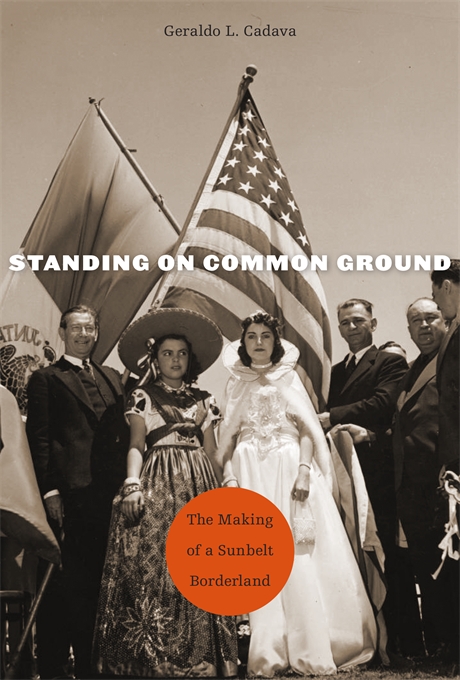
Book Review: Standing on Common Ground: The Making of a Sunbelt Borderland

Cadava, Geraldo L. Standing on Common Ground: The Making of a Sunbelt Borderland. Cambridge, MA: Harvard University Press, 2013. 320 pp. Hardcover. $39.95

Standing on Common Ground, Cover

Geraldo L. Cadava’s Standing on Common Ground: the Making of a Sunbelt Borderland is a richly detailed investigation of postwar Tucson and its social, political, economic, and cultural significance to Arizona and Sonora. The author draws on well-crafted case studies of persons and institutions, posing them as emblematic of the region’s larger history and historical relationships. The book is strongest when describing the sociocultural landscape of its host city. Tucson comes alive on the page, and Cadava does an excellent job interweaving multiple narratives into a cohesive story that contextualizes the region’s colonial past within the construction of twentieth-century racial, political, and cultural structures.

Continue reading

Categories: Uncategorized | 2 Comments

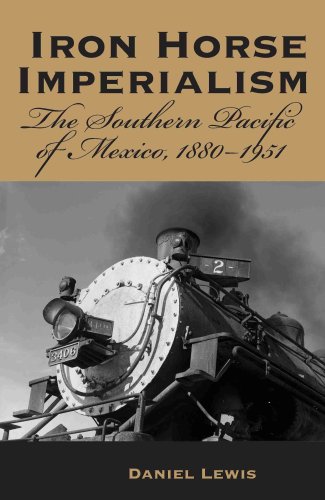
Book Review: Iron Horse Imperialism: The Southern Pacific of Mexico, 1880-1951

Lewis, Daniel. Iron Horse Imperialism: The Southern Pacific of Mexico, 1880-1951. Tucson: University of Arizona Press, 2007. 192 pp. Paperback. $18.95

Iron Horse Imperialism Book Cover

For Borderlands historians, Iron Horse Imperialism: The Southern Pacific of Mexico, 1880-1951 offers an exemplary study of business, politics, and society. Daniel Lewis uses the history of the SP de México as a vehicle to explore questions of identity and state formation in the U.S.-Mexico borderlands. Incorporated in New Jersey, for many years, managers touted the company’s U.S. identity, characterizing the enterprise within an imperialist discourse that endeavored to extend “progress” to an “uncivilized” landscape. At the time, the government of Porfirio Díaz welcomed the new line as a means to improve access to Mexico’s difficult-to-reach northwestern lands, reinforcing its control over the region. Harsh terrain and local resistance slowed construction efforts, and over the decades, the company relied on often-contentious relationships with Yaquis, Cristero rebels, and the government to complete the track from the border to Guadalajara. In particular, the Mexican Revolution challenged expansion plans, forcing the company’s powerful U.S. parent to pour millions of dollars into the subsidiary’s operations to repair damage the conflict inflicted.

Continue reading

Categories: Book and Journal Reviews | Leave a comment

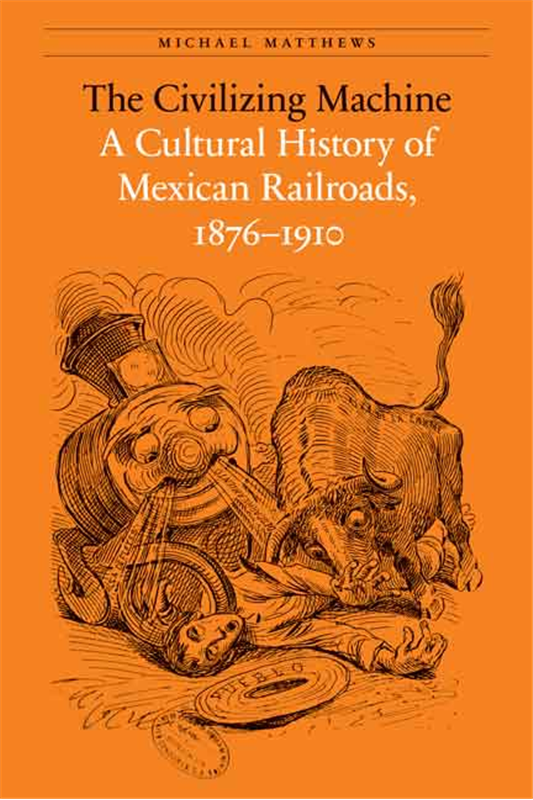
Book Review: The Civilizing Machine: A Cultural History of Mexican Railroads, 1876-1910

Matthews, Michael. The Civilizing Machine: A Cultural History of Mexican Railroads, 1876-1910. Lincoln: University of Nebraska Press, 2014. 340 pp. Paperback. $40 

Michael Matthews examines the cultural representations of railroads in the Mexican press, articulating their significance to popular society and state formation during the Porfiriato. The Civilizing Machine: A Cultural History of Mexican Railroads, 1876-1910 delves into the writings and imagery of newspapers and magazines loyal and opposed to the regime of Porfirio Díaz. Matthews argues that rival political factions often shared much common ground discursively when characterizing railroads and locomotive travel as harbingers of modernity. Few disagreed that the iron horse embodied notions of “order and progress” poised to deliver Mexico to the club of “modern” nations. Notable differences arose, however, in the ways print outlets portrayed the railroad as an aspect of government policy during this period. For example, Díaz’s supporters used public commemorations when opening new railway stations to stage the national government’s political power and technical prowess. In contrast, opponents cited locomotive accidents and labor abuses committed by foreign-owned railroad companies as manifestations of government ineptitude and preferential treatment given to Americans and Europeans. Although rarely rejecting the technology in toto as bad for the nation, critics instead used the railroad as a foil to appraise the regime without running afoul of state censors.

Continue reading

Categories: Book and Journal Reviews | 1 Comment

Website Built with WordPress.com.