
The U.S.-Mexico border is a region of overlapping contact zones, an interstitial space where economic, political, social, cultural, and individual exchanges occur across the international boundary on a daily basis. Amid this personal and communal fluidity, however, the border also exists as an entity fixed by diplomatic treaty, militarization, and police enforcement as government agencies erect physical barriers for the abstract lines drawn across this area of North America. While state surveillance and regulation seek to make the region divisible, it is a project contested by the millions of undocumented immigrants, and others, who regularly defy its reductive processes. How the border is viewed and the vantage point from which it is observed are important subjective factors in a discussion of this area. In many ways, for the people who actually live in the borderlands, the national debate emanating from Washington and Mexico City can often appear astoundingly detached from the exigencies of everyday life. Continue reading
Uncategorized
Crossing an Uneven Terrain: Capital, Labor, and State Power in the U.S.-Mexico Borderlands
Borderlands History Interview Project Presents Dr. Ernesto Chávez
The Borderlands History Interview Project (BHIP) will showcase the voices of respected historians in our field to discuss their current projects and views on the future of borderlands history. We’re excited about this new venture and look forward to your comments!
While at the 2015 American Historical Association conference in New York City earlier this month, I was able to sit down with Dr. Ernesto Chávez, Associate Professor at the University of Texas, El Paso, to discuss his latest project and his take on borderlands history. He graciously accepted to be the first interviewee in our BHIP series, highlighting scholars who are changing and challenging our field. We nestled into the Hilton hotel conference room chairs, and trying not to disturb the other historians gathered charging their phones and frantically answering emails, we began our interview about his life, his new project, and the history and future of borderlands.
Continue reading
Call for Book/Article Titles for Borderlands History Blog Historiography
Calling all BHB followers: As the 2015 school year begins, we here at the Blog are looking to update the page’s historiography sections and we need your help. What 2013/2014 texts and articles do you feel should be included on our page? As always, we welcome interdisciplinary and comparative borderlands submissions. Submit your favorite/relevant works on Facebook, Twitter, or at Kendra.Moore@nau.edu and we will add them to the Blog. If you have posted before you can just add them to the pertinent sections. Happy New Year!
Call for Papers: The State in/of Borderlands History
The State in/of Borderlands History
University of Texas at El Paso
El Paso, Texas
November 6-7, 2015
Keynote Speaker: Kelly Lytle Hernandez (UCLA), author of Migra!: A History of the U.S. Border Patrol
The Department of History at the University of Texas at El Paso announces the conference, “The State in/of Borderlands History,” to be held November 6-7, 2015. Although the state has been a defining and an often ominous presence in the history of the Mexico-U.S. Borderlands, the systematic and explicit study of the state has been rare in Borderlands historiography. While historians of the U.S. have recently devoted increased attention to the state, already a well-established focus of Mexicanists, social and cultural history has largely shaped the field of Borderlands history. Current scholarship on transnationalism and the history of empire has also challenged the “natural” character of the nation-state.
Yet, beginning in the colonial period, and in fact before, a variety of state structures have shaped human existence in the region. Those living in and traveling through the borderlands have encountered and engaged with the state through forced labor in armies, mines and missions, the collection of taxes, and military action as well as immigration control, border policing, education and public health regimes. In these and other arenas, state structures–national, local, indigenous, and/or transnational–have made themselves present in borderlanders’ lives and, in turn, been challenged and shaped by them. Borderlands, geographical and conceptual, can serve as a critical location for a new approach to understanding state formation and state power.
Conference Notes: Western History Association 2014
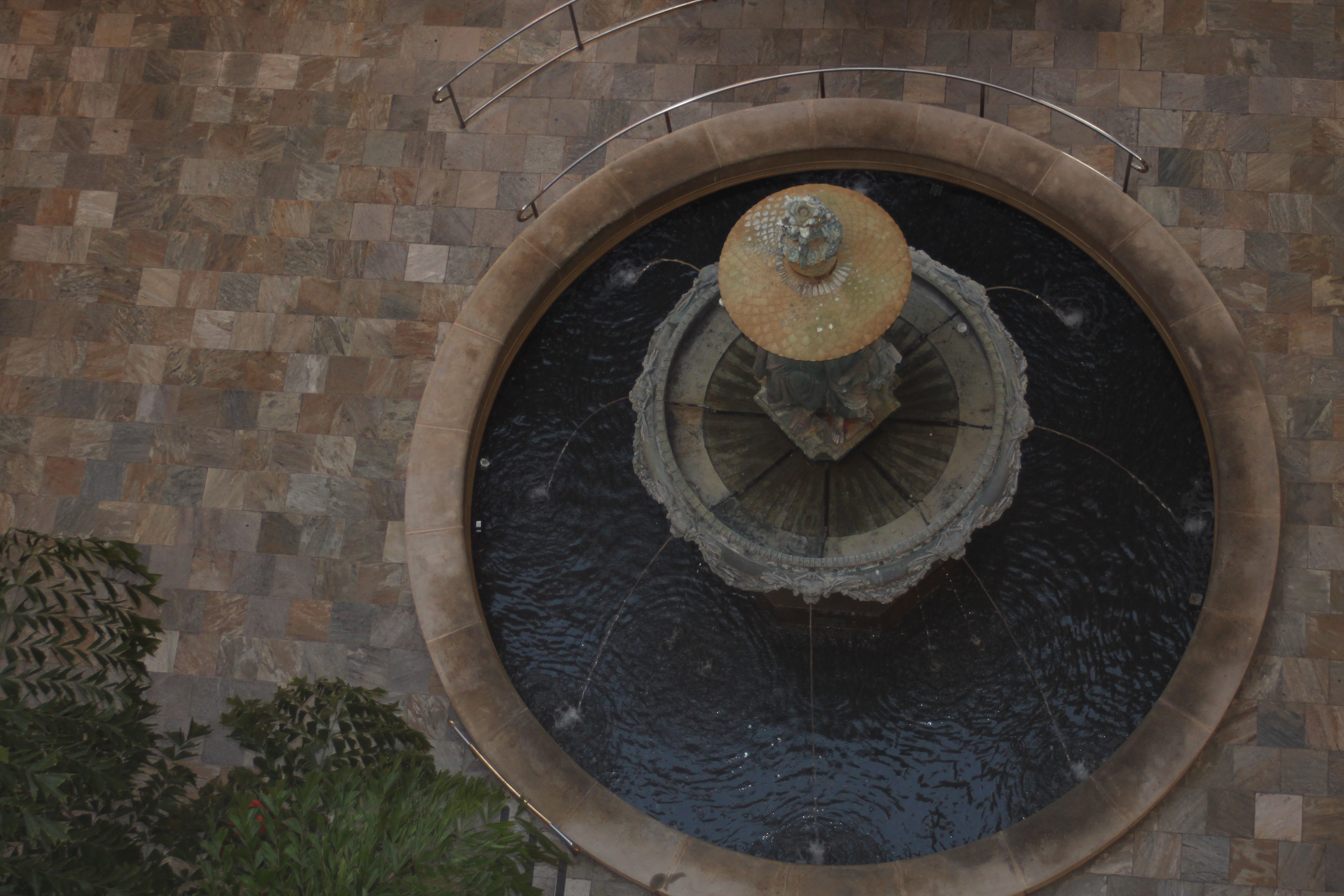
Newport Beach Marriott Bayview, fountain on the ground floor.
It felt like everyone I know was on their way to the Western Historical Association (WHA) in Newport Beach this year. After making sure some of my colleagues were confirmed on the program, I took a peak at its content. The program read like a “who’s who” of the most exciting junior and senior scholars in the field of borderlands history. I booked a room at the Marriot and made a beeline for SoCal. Before I continue, I should mention I am a doctoral candidate at the University of Texas, El Paso (UTEP). Our Borderlands Ph.D. program made a big showing at the conference (someone made an off the cuff remark stating we were the new SMU), and I made every attempt to visit those panels. However, I did manage to check out a few panels not featuring UTEP students. Here is a brief analysis of my experience at the WHA Conference 2014.
Whizzing down highway 5 on Wednesday (I live in the Bay Area these days) and coming face to face with L.A. traffic, I knew I would not make it to see the first panel organized by the Coalition for Western Women’s History Roundtable entitled “Women Crossing Borders.” Luckily at the opening reception that evening, I bumped into one of the presenters on the panel John McKiernan-González. We spoke briefly about the panel and Precarious Prescriptions: Contested Histories of Health and Race in North America, a new book he edited with Laurie Green and Martin Summers. Other scholars in attendance that evening were Eric Meeks, Sam Truett, as well as incoming President of the WHA Elizabeth (Betsy) Jameson. Seeing so many borderlands historians in one place was not only exciting, but helped to set the tone for the rest of conference. Continue reading
Call for Borderlands History Syllabi
Hello Borderlands History Blog followers. As the the 2014/2015 academic year begins to pass us by, we at the Borderlands History Blog have decided to create an interdisciplinary syllabus repository for courses on the U.S./Mexico, North American, and Global borderlands. Our ultimate goal is to establish a space where academics and teachers of all levels can access the latest information on the reading and visual materials, sources, methods, and assessments their colleagues use to aid students’ understanding of these diverse regions. Along with submissions from the field of History, we also encourage those from areas such as Anthropology, Comparative Borderlands Studies, English, Ethnic Studies,Indigenous Studies, Latino/a Studies, Sociology, and Women’s and Gender Studies. Syllabi from fields not mentioned above are also encouraged! Please send your submissions as PDF attachments to Dr. Kendra Moore at Kendra.Moore@nau.edu and have an excellent school year.
Borderlands and Mega-Regions
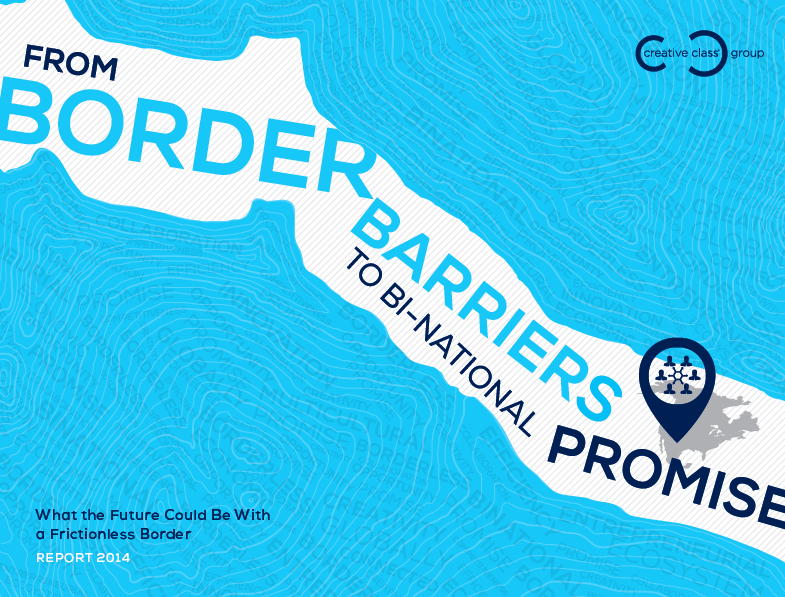
Richard Florida and the Creative Class Group recently examined the San Diego-Tijuana “mega-region” through the lens of regional economic development in an age when heightened national security is increasingly at odds with a globalizing economy. The resulting report, “From Border Barriers to Bi-National Promise” focuses on the established business and economic ties that connect San Diego and Tijuana, noting that a “frictionless border” would facilitate increased innovation and entrepreneurialism in industries such as high-tech on both sides of the border while allowing greater access to the thriving art, music, and culinary scenes in the mega-region. Unfortunately, the report offers that since 9/11, “The border has been seen as a national security issue rather than a commerce or economic development issue.”
Florida and his co-authors – most notably the University of California San Diego’s Mary Lindenstein Walshok – offer points to consider that are forward thinking and familiar to anyone studying the border region of the U.S. Southwest: Transportation infrastructure needs to be improved; investment needs to be made in more advanced technologies to manage border operations; and the U.S. government should separate policy from security, incorporating a wide range of departments when addressing border issues. Hopefully, this report will encourage policymakers in the fields of commerce and trade to push for reform.
What I found most illuminating about this report and salient to the study of borderlands history is how Florida conceptualizes the border defying mega-region in question. He states, “Place, not statehood, is the central axis of our time and our global economy.” Examining borderland regions in terms of “place” opposed to the geographically bounded spaces determined by borders drawn by nation-states could be useful to borderlands scholars researching other aspects of borderlands history, such as religion, culture, violence, and politics. This is true in my own work wherein documenting and understanding the sprawling expanse of South Texas and Northern Mexico over the course of a century is more a consideration of a place arbitrarily divided and not a space decided.
Click here for a full pdf of the report
Storms of Iron and Copper: Reflections on the Social Impact of Industrial Technology in the Nineteenth-Century U.S.-Mexico Borderlands
Across the U.S.-Mexico Borderlands, the extractive industries carved complex social and environmental changes that deeply affected the landscape and communities of the region. Private companies and governments collaborated to build new railroads to support mining and other commercial endeavors, while new groups of people arrived in search of work. Long-standing views of proper conduct within frontier society gave way to hegemonic ideas of what it meant to be a “good citizen.” These transformations were closely linked to the deployment of new time-saving technologies that mobilized capital resources on behalf of state and corporate agents. This essay offers brief reflections on the impact of technical infrastructures and industrialization on everyday life in northern Mexico and the U.S. southwest during the nineteenth and early twentieth centuries. Continue reading
Call for Borderlands History Syllabi
Hello Borderlands History Blog followers. As the the 2014/2015 academic year begins to pass us by, we at the Borderlands History Blog have decided to create an interdisciplinary syllabus repository for courses on the U.S./Mexico, North American, and Global borderlands. Our ultimate goal is to establish a space where academics and teachers of all levels can access the latest information on the reading and visual materials, sources, methods, and assessments their colleagues use to aid students’ understanding of these diverse regions. Along with submissions from the field of History, we also encourage those from areas such as Anthropology, Comparative Borderlands Studies, English, Ethnic Studies,Indigenous Studies, Latino/a Studies, Sociology, and Women’s and Gender Studies. Syllabi from fields not mentioned above are also encouraged! Please send your submissions as PDF attachments to Dr. Kendra Moore at Kendra.Moore@nau.edu and have an excellent school year.
 Borderlands History