conferences

UTEP Borderlands History Conference, Nov. 6-7, 2015

Keynote Speaker, Panels and Panelists:

—–

Friday, November 6, 2015.

UTEP-BHC-11-06-2015-Photo1

Dr. Kelly Lytle Hernández (above) from UCLA presented the conference keynote address from her latest work titled: “Caged Birds: immigration and the Rise Of Mexican Incarceration in the United States” — at El Paso Natural Gas Conference Center, University of Texas at El Paso.

—–

Saturday, November 7, 2015. 

UTEP-BHC-11-07-2015-Photo5

Dr. Julian Lim (above), Assistant Professor, from Arizona State University, presents her paper titled: “Space Outside States?: Borderlands, Statelessness, and Migrations” at the Hilton Garden Inn El Paso/University as part of the Panel 1: “Borders, Bodies and the State.”

—–

UTEP-BHC-11-07-2015-Photo6

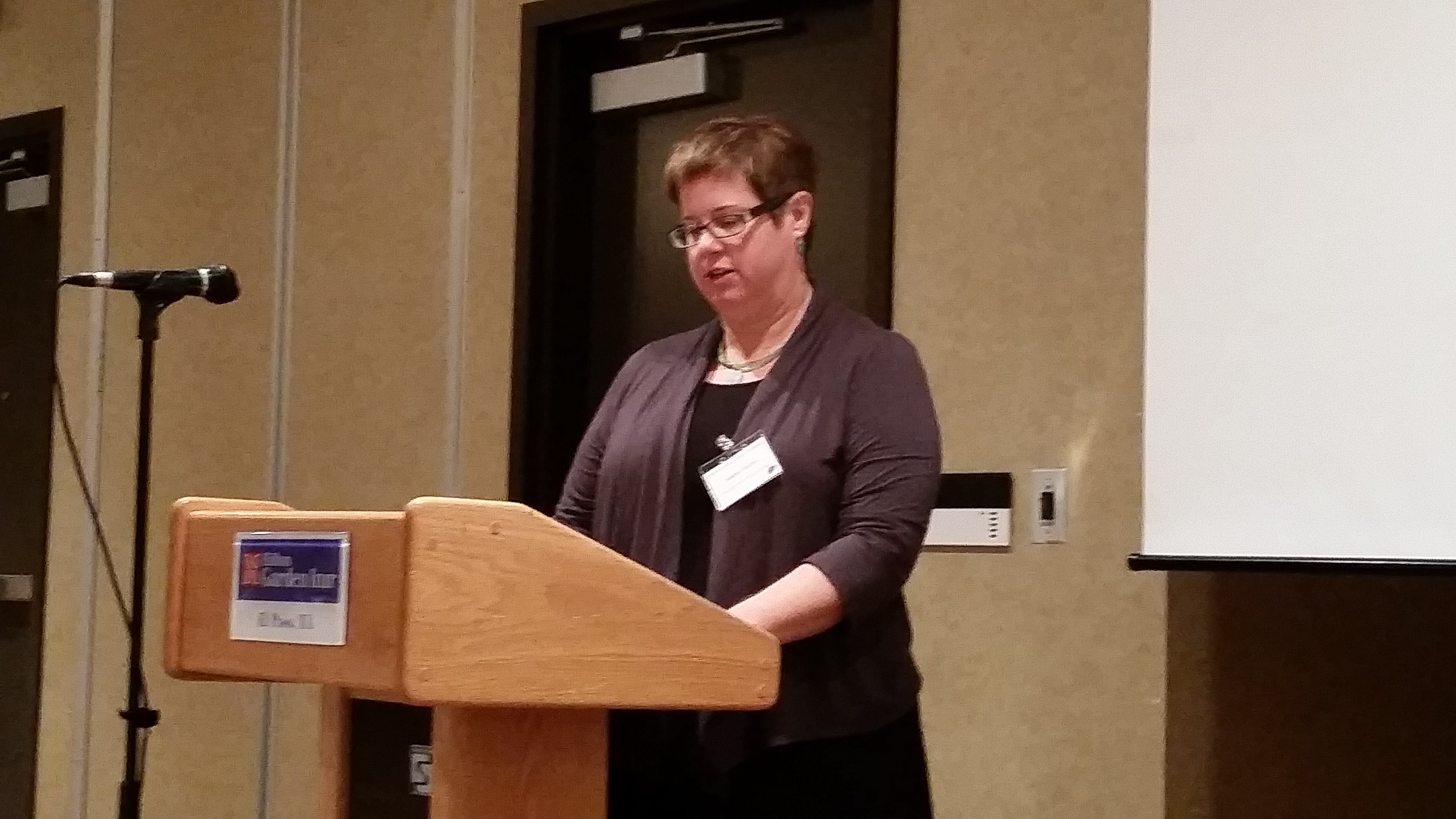
Conference organizer Heather Sinclair (above), Doctoral Candidate at the University of Texas at El Paso, presented her paper “Borders, Bodies, and Babies: The State and Precarious Reproduction In the U.S.-Mexico Borderlands, 1922-1942.” at the Hilton Garden Inn El Paso/University.
Continue reading

Categories: conferences | Leave a comment

UTEP 2015 Borderlands History Conference

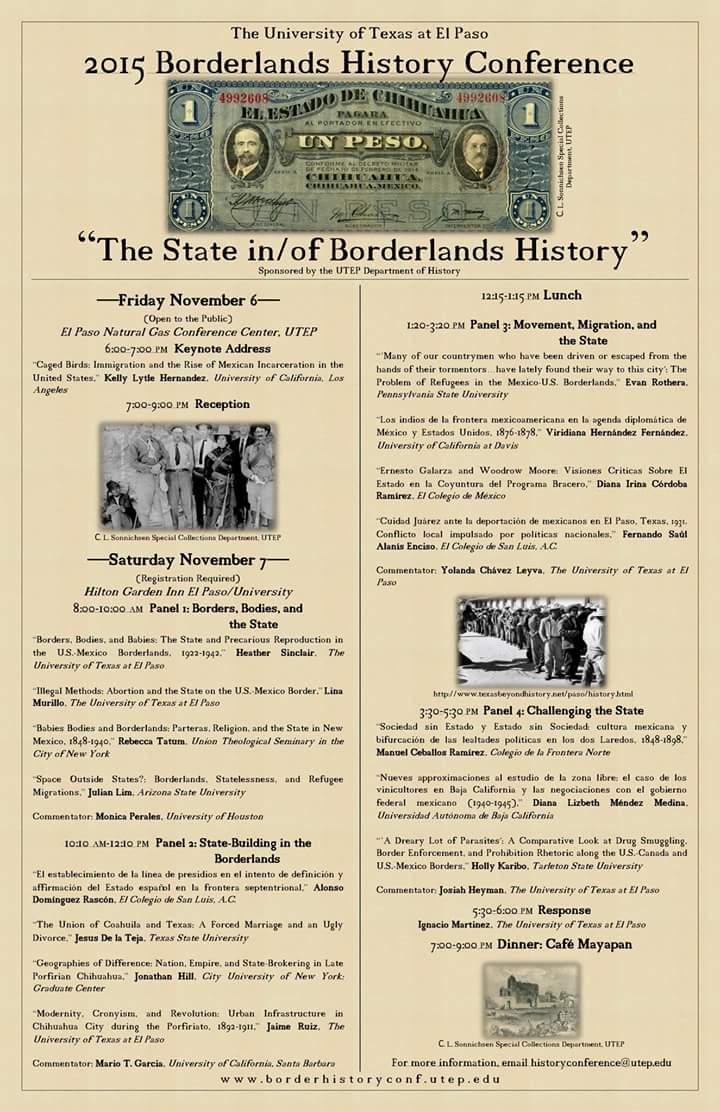
Dear readers, we wanted to share the schedule for UTEP upcoming conference on Borderlands  history. Check it out below (nice work on the design, we might add):

image

Categories: conferences | Leave a comment

Conference Notes: Western History Association 2015

Photo by Ernesto Chávez

Photo by Ernesto Chávez

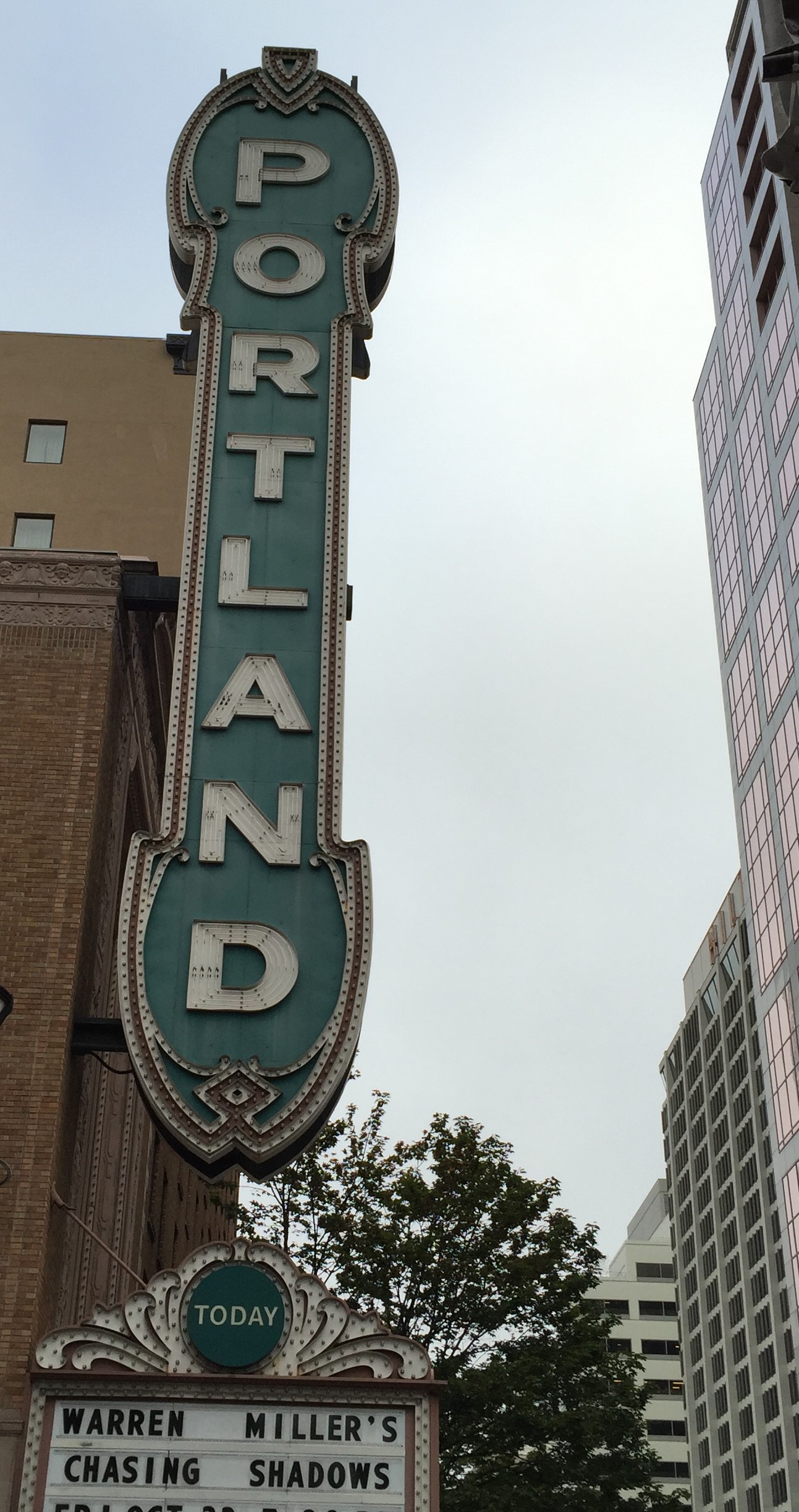
The Western History Association 2015 conference in Portland, Oregon was so fun and I was so busy, I barely had the opportunity to take any pictures! The 55th annual meeting was jam-packed with topics that ranged from scholars discussing twenty years of “Queering the West” to questions about the significance of the State and Transnationalism while engaging the histories of immigration, sex work, and health in the West and the Borderlands. I knew it would be a good conference when I first saw the program and was conflicted about which panels to attend. The Program Committee co-chairs, José Alamillo (California State University, Channel Islands), Lori Ann Lahlum (Minnesota State University, Mankato), and Karen Leong (Arizona State University) did an extraordinary job of organizing panels and having some of the top historians in the field as part of the conference. With that I said, I want to tell you about just a hand full of panels that I was able to attend and discuss some of the most important things I learned during my brief trip to Portland.

This year, I arrived early enough to attend all of the panels scheduled on the first day and was excited that both the “Coalition for Western Women’s History Roundtable: New Directions: Women, Gender, and the Making of Borders” and the “Presidential Plenary Session: Transnational Wests” focused on issues of gender, sexuality, race and the Borderlands. Off the bat, the discussion in the roundtable panel was vibrant, especially as they began to discuss the inroads women’s history has made into Borderlands history. Recalling Gloria Anzaldúa’s seminal work Borderlands/La Frontera: La Nueva Mestiza, scholars on the panel suggested “traditional” Borderlands history has yet to truly engage her ideas about violence, race, sexuality, and gender in the history of the region. The conversation on the panel proposed that there was a divergence between what we would think of as “traditional” Borderlands historiography and the different fields that have made interventions into it, such as Chicano/a and Latino/a studies, studies on sexuality and race, as well as women’s history. Some suggested that perhaps these rigid ways of understanding the historiography of Borderlands history is self-inflicted and must be undone by those of us who consider ourselves Borderlands historians, but use different methodologies and theories to understand the significance of the region in relation to and beyond the nation-state. Continue reading

Categories: conferences | Tags: | 4 Comments

Notes on Dr. Michael Wolff’s presentation: “Pacifying the Slums: Police and Gangs in Rio de Janeiro”

In today’s guest post, Dr. Brandon Morgan, who teaches at Central New Mexico Community College, writes about the recent talk Michael Wolff gave on campus at the University of New Mexico. For more from Brandon, you can follow him on Twitter: @CNMBrandon His most recent publication, “Colonia Díaz and the Railroad that Almost Was: The Deming, Sierra Madre and Pacific, 1890-1896” appeared in the edited volume Just South of Zion: Mormons in Mexico and its Borderlands.

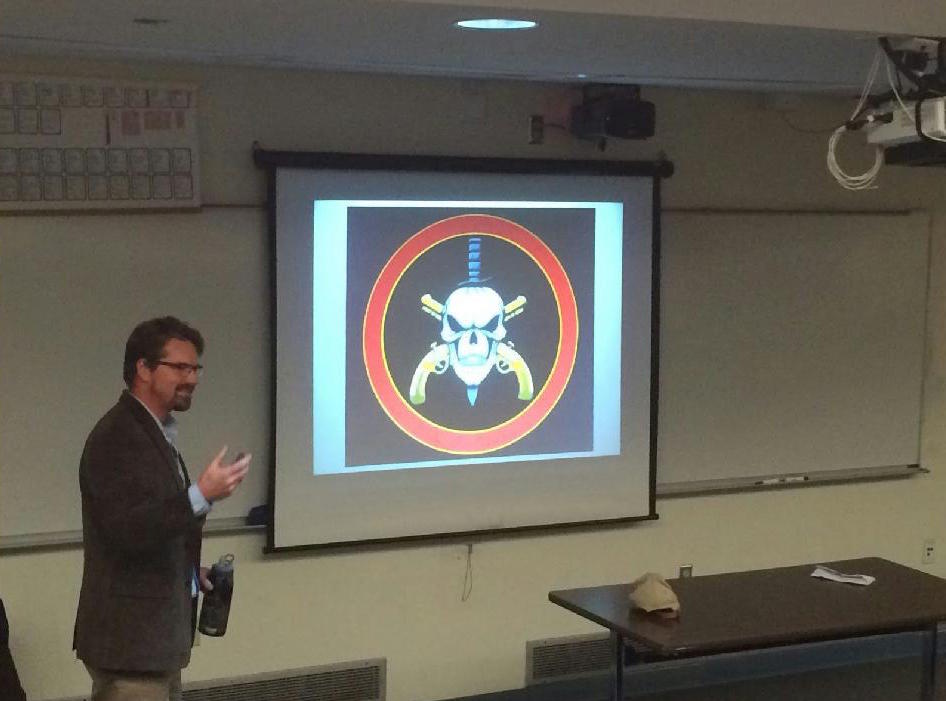
On Wednesday, October 22, Dr. Michael Wolff, Visiting Professor in the Political Science department at the University of New Mexico, gave an engaging talk on the recent history of conflicts between police and gangs in the favelas of Rio de Janeiro. The presentation was the second in the fall speaker series to promote the collaboration between the University of New Mexico’s Latin American and Iberian Institute (LAII) and Central New Mexico Community College (CNM). As such, the talk took place on the CNM campus, and students and faculty of both institutions attended. I am one of the faculty members working to develop new LAS courses at CNM, so I was very happy to see robust attendance at Dr. Wolff’s talk.

wolff-page-001

Due to my borderlands history background, Wolff immediately caught my attention with his definition of favelas as places that are just outside the attention and reach of state control. Although common perceptions persist of favelas as impoverished shantytowns (which in certain respects they are), the rise of organized drug trafficking since 1993 has driven the creation of developed micro-cities within the geographical boundaries of most favelas. Between 1993 and 2008, criminal governance allowed for the construction and growth of such micro-cities. Rising rates of violence and the increasing power of drug trafficking groups meant that authorities largely ignored events within favelas.

Continue reading

Categories: conferences | Leave a comment

Queer History, Spaces, and Rights on the Border

Filodiversidad (1)Friday, October 23rd the Colegio de la Frontera Norte, Cd. Juárez Campus (COLEF), hosted the “Jornada sobre diversidades sexo-genéricas: Filodiversdad.”  The event featured a press conference promoting the Cartilla LGBTTTI, a Mexican federal legal tool designed to articulate the rights of queer people and victims of sexual violence. Following the press conference, the COLEF presented an academic panel, “Diversidad sexual y derechos humanos”; a presentation of the newly published Queer Geographies; a live performance of Juarez artist, Ramón Padilla; and a ribbon-cutting ceremony for the COLEF installation of the Engendering Community Project.  The jornada serves as an excellent example of the intersection of public history, interdisciplinarity, and activism in a borderlands context.

The headliner of the event, Ana Suárez from the Comisión Ejecutiva de Atención a Víctimas, joined Alfredo Limas of the Universidad Autónoma de Cd. Juárez and event coordinator Salvador Cruz (COLEF) for the opening panel on sexual diversity and violence.  Cruz, a social scientist interested in masculinities, youth, and violence, offered a theoretical context for the event’s discussion.  Limas, whose work focuses on gendered violence in Juárez, offered a discussion of alarmingly hateful online response to media coverage of LGBT civil rights advances.  Providing a policy-based perspective on gendered violence, Suárez described the Cartilla and its function as a legal standard.  Though she emphasized that civil rights are not negotiable, she recognized the challenges LGBTQ Mexicans face and lamented that many of them feel exercising their civil rights is a far-fetched dream.

91p4go9OIUL

Joining the event to promote Queer Geographies were project coordinator Lasse Lau and contributor Felipe Zúñiga-González.  Blending provocative short essays and striking photography the self-published work explores queerness, activism, and visual arts in Beirut, Tijuana, and Copenhagen.  A must-read for folks interested in queer theory, space, and sexuality, this gritty work even takes the reader cruising for sex in the bushes of a Copenhagen park and in the online chat rooms of Tijuana.  The book’s most innovative feature, “A Hands Routine,” comes in form of a folding map.  Describing a different type of clandestine rendezvous, the timeline of in-car hand holding documents Lebanese artist Omar Mismar’s everyday decisions to hide or come out.
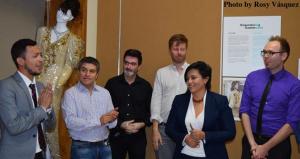
11063580_10153179791150823_8132968282906796884_nLike Queer Geographies, the Engendering Community Project aims to celebrate the experiences of queer people in marginalized spaces, notably the border community of El Paso-Juárez.  Started over five years ago as an oral history project by the former director of women’s studies at the University of Texas at El Paso (UTEP), Brenda Risch, Engendering Community evolved into a hugely successful public history exhibit which ran from June through September at UTEP’s Centennial Museum.  Explaining the project’s trajectory and the feminist/ethical impulse to have the project available for participants and the public on both sides of the border, J. Aaron Waggoner (this author) inaugurated the COLEF opening.  Though the exhibit will be only be available at its current location through early December, it will provide a space for ongoing conversations and organizing.

J. Aaron Waggoner is a Doctoral Candidate in History at the University of Texas at El Paso.

Categories: Book and Journal Reviews, conferences, News and Announcements | 1 Comment

Borderlands and Transnational History at the 2015 Western History Association Conference

Each year I like to make a list of the borderlands and transnational history panels at the Western History Association annual conference. This year we will be in Portland and with the conference theme of “Thresholds, Walls, and Bridges,” there are sure to be lots of good topics! As always, there are some very tough decisions to make with some painful double-booking. I swear, it seems to get worse every year – multiple must-see panels all booked at the same time. Perhaps this is a good sign. Either my interests are ever-broadening and everything looks amazing, or there is simply more and more great work being done. Its probably a bit of both.

Here’s the breakdown: I am listing entire panels, even if only 1 paper is relevant to borderlands or transnational history. Also, I am interpreting these concepts broadly, but not too broadly. Often, conference theme buzzwords tend to creep into panel and paper proposal titles in ways that don’t always fit.. If there are any I miss, feel free to comment below. See you there!

Originally posted at my blog, http://www.bwrensink.org
Re-posted here for everyone’s benefit.

Continue reading

Categories: conferences | 1 Comment

Reflections: RMCLAS 2015

The annual meeting of the Rocky Mountain Council for Latin American Studies (RMCLAS) brought scholars to Tucson, Arizona for four days of insightful conversation, networking, and professional development. This year’s conference, held April 8-11 at the Marriot on the campus of the University of Arizona, was especially beneficial for students of the U.S.-Mexico borderlands.

Continue reading

Categories: conferences, News and Announcements, Teaching/Professional Development | Tags: , , , , , | Leave a comment

Website Built with WordPress.com.