Call for Papers: Borders, Borderlands, and Border Thinking in Latin America

Dear readers, the Latin American and Caribbean Studies Center at Stony Brook University has announced its upcoming graduate student conference. This year’s theme is “Borders, Borderlands, and Border Thinking in Latin America.”The conference is co-hosted with Columbia University and will be held in New York City on April 22, 2017 and Cynthia Radding will be the keynote speaker. The organizers also listed a number of themes and questions they hope presenters will address:

What analytical lenses (race, gender, ideology, etc) can point us in fruitful directions for a more inclusive borderland approach?

Does broadening the concept of “borderland” (beyond a geographical scope) weaken its effectiveness? In what ways can borderlands be conceived beyond borderland spaces?

How have subalterns and racial “others” been represented in borderland regions? How has this representation impacted these “others” and the wider borderland society they live in? How can we move beyond seeing these subalterns as “others” toward conceptualizing them as central actors in borderland regions?

What mechanisms have colonial and postcolonial states used to incorporate borderland regions into centers of power? How and why have these been successful or unsuccessful?

The deadline to submit your proposal is March 10. Proposals, abstracts, and/or papers, plus a short CV, should be sent to Matthew Ford or Zinnia Capó.

Categories: Calls for Papers | Leave a comment

A Year in Review: BHB in 2016

The past twelve months will likely be remembered as one of the most frustrating years of our time. From civil strife and violence on American streets to brewing economic and political crises in Mexico to war in other parts of the world. At the blog, we have tried to make sense of these complex events from the perspective of our historical training. We have looked to the past to reflect on the present and think about our future. Over this past year, thanks to your support, our blog has also continued to grow. What follows is a list of some of our favorite and most popular contributions in 2016.

This year, our most popular essay was Lori Flores´s From Dissertation to Book: Writing a Book Proposal. We strive for practical contributions to be an important part of our work at the blog as a service to readers. In this piece, Lori writes: If you’ve just finished your dissertation, congratulations! Now set it aside for a good while. Trying to tackle dissertation-to-book revisions too soon will prevent you from seeing your graduate school-inspired language, and from knowing what needs to be tweaked, cut, or added in terms of content. Many times, you need a more distant perspective on your work in order to articulate to editors how you plan to produce a book, which is an entirely different beast in terms of framing, style, and structure. Feel free to circulate your work to valued colleagues for their input while you’re gaining that distance, and tackle other passion projects or interesting new readings in your field for some inspiration.

The blog has featured a number of excellent conversations with scholars. Lina Murillo’s Borderlands History Interview Project (BHIP) has continued to grow, adding two new episodes this year. She returned in March, interviewing Pablo Mitchell on his work: Mitchell pointed to one of the underlying tensions he feels has driven his work in Borderlands history. He explains that while some historians continue with a Boltonian sense of the borderlands, his allegiance lies more with Cherrie Moraga and Gloria Anzaldúa’s theories that have provided the theoretical framework for his research. Anzaldúa’s work helped Mitchell to think about sexuality, race, gender, and borderlands and to ask different questions of archival materials and read against the grain. Continue reading

Categories: Essay Series | Leave a comment

Clements Center Research Fellowships for the Study of Southwestern America

Clements Center for Southwest Studies 2017-2018 Fellowship Applications: Deadline for Submission, January 20, 2017.

Since 1996, the Clements Center for Southwest Studies, located at Southern Methodist University in Dallas, Texas, has nurtured scholars – both junior and senior – who work on the Southwest and Borderlands.  Scholars are given a year, in residence, in which to focus solely on completing a book manuscript. Past fellows include: Juliana Barr (Peace Came in the Form of a Woman: Indians and Spaniards in the Texas Borderlands), Monica Perales (Smeltertown: Making and Remembering a Southwest Border Community), Katrina Jagodinsky (Legal Codes and Trees: Indigenous Women’s Sovereignty in the Sonoran and Puget Sound Borderlands, 1854-1946) and Pekka Hämäläinen (The Comanche Empire). Continue reading

Categories: News and Announcements | Leave a comment

Latinx Undergraduates and the Future of the History Profession

During the past few months, the AHA released several reports detailing a nationwide decline in History majors across campuses. In this month’s Perspectives on History, Yovanna Pineda problematizes that claim, and illuminates in her own two-year case study how one academic constituency – Latinxs – is increasing in history major enrollments. An associate professor of Latin American history at the University of Central Florida, Pineda sampled and interviewed first-generation Latinx students and their experiences within history departments as well as those applying to history graduate programs.

She finds that while many first generation Latinx college students share a passion for history, several top research and elite private institutions fail to successfully recruit such students. Pineda reports, for example, that some graduate programs even questioned a student’s English competency and requested that they take the TOEFL to ensure language ability. Her analysis confirms the need for an institutional apparatus that will continue to effectively recruit and retain first generation students of color in the history profession.

Read her article here.

Categories: Essay Series, News and Announcements | Leave a comment

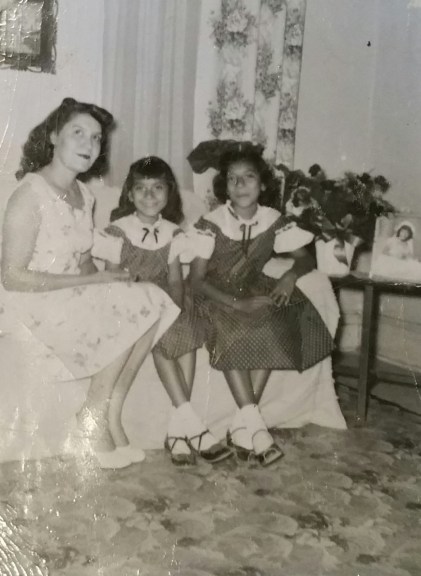
Demolishing the Barrio

granny-sue-and-sister

Lorenza Martinez, Susana Morales, and her sister Martha.

There are so many political issues “trending” right now it has been hard to keep up with the pace.  Between President-elect Trump’s jaw-dropping cabinet picks and the devastating war in Syria; between Fidel Castro’s death and the future of Cuba and the struggle against the Dakota Access Pipeline, sometimes local concerns and issues seem to take a backseat to these national and international crisis.

This is not so on the U.S.-Mexico border.  Currently, there is a local group of activists, academics, politicians and residents attempting to resist urban renewal plans that will devastate a major historical area on El Paso’s Southside.  Their efforts are forcing the city government to contend with an informed community bent on protecting historical sites and homes still inhabited by residents in this traditionally ethnic Mexican barrio.  As developers salivate over this potentially lucrative opportunity, developing $180 million multi-purpose indoor arena, residents and activists alike are coming together to fight the destruction of one of El Paso’s oldest neighborhoods and the potential displacement of dozens of families and businesses.

Since my own research on reproductive rights is concerned with the area south of the train tracks, I was excited when a walking tour was announced to show city residents the breadth of the proposed development project and the effects the demolition of these city blocks would have on El Paso’s residents and to the city’s legacy.  My mother-in-law, Susana Morales (Martinez is her maiden name) had planned a trip downtown to purchase some trinkets for her grandchildren (my daughters) and I asked if she would join me on the walk later that afternoon.  “Sure mija!” she exclaimed, “You know I grew-up on South Leon near Overland.”  Her family has long ties to the border region and throughout her life has lived in some of the most historic areas of the city, but this was the first time she mentioned Duranguito. Continue reading

Categories: Essay Series, Interviews | 1 Comment

New Book: Border Flows

A new book is out on water and the history of managing this resource in the U.S.-Canadian borderlands. Climate change will deeply affect how nations negotiate water rights, and this tension will continue to influence political realities in border regions for decades to come. Border Flows: A Century of the Canadian-American Water Relationship, edited by Lynne Heasley and Daniel Macfarlane, is a welcome and timely addition to the scholarly literature. Continue reading

Categories: News and Announcements | Leave a comment

Westworld and the Frontier Imaginary

Lina and Mike have been obsessed with Westworld over the last two months, and in this essay, they share their reflections on the first season of the series as it came to an end last Sunday. There are mild spoilers ahead, but the two authors keep the discussion focused on the major themes of the TV show as understood through a Borderlands history perspective. We hope you enjoy it. -ed

Westworld, set in the American West in the mid-to-late nineteenth century, tells the story of a futuristic amusement park where many of the “cast members” (to borrow a term of Disneyworld parlance) are not human, but rather humanoid robots.  In the narrative, there are frontier towns, Mexican outposts, renegade Confederate soldiers, violent indigenous tribes, and endless lines of gunslingers and prostitutes. They serve the wealthy clients who pay large sums to visit the park and indulge in the bacchanalia and bloodshed on offer. Undergirding this scifi-western fantasy, dozens of levels beneath the surface, is the infrastructure of the park, built by its director, Dr. Robert Ford (Anthony Hopkins), and run with the help of his chief deputies, Bernard Lowe (Jeffrey Wright) and Theresa Cullen (Sidsi Babbet Knudsen), whose departments also vie for power, while references are made to impatient, faraway investors.

Some of us on the Borderlands History blog have been quite taken by this sci-fi thriller and believe we can learn something about the contemporary understanding and continued obsession with the frontier through HBO’s newest hit.  Moreover, we see that the show not only uses the borderlands region as a material space where sexual and violent fantasies are played out by park visitors and workers alike, but a metaphor for other historical and modern borderlands.

Like Frederick Jackson Turner’s famous address before the American Historical Association, Westworld is also deeply concerned with the frontier. Whereas Turner’s frontier was geographic, this drama’s is scientific. Both use some concept of the frontier to understand how culture and society are shaped. Violence becomes the catalyst for westward expansion in Turner’s imagination, and helps push major turning points for the narratives constructed in the park for its patrons. Continue reading

Categories: Essay Series | 3 Comments

A Conversation with George T. Diaz, author of “Border Contraband: A History of Smuggling Across the Rio Grande.”

In Border Contraband: A History of Smuggling Across the Rio Grande (University of Texas Press, 2015) Professor George T. Diaz examines a subject that has received scant attention by historians, but one that is at the heart of contemporary debates over U.S.-Mexico immigration and border enforcement. Focusing on trans-border communities, like Laredo/Nuevo Laredo, Diaz details the interplay between state efforts to regulate cross-border trade and the border people that subverted state and federal laws through acts of petty smuggling and trafficking. Using folk songs (corridos), memoirs, court documents, and newspapers, Diaz uncovers the social history of a transnational contrabandista community that responded to the hardening of the U.S.-Mexico border and the enforcement of trade regulations through the formation of a moral economy. Holding nuanced views of newly erected legal and physical barriers to the mobility of people and consumer goods across the border, contrabandistas established a cultural world of smuggling that regulated trade on its own terms and frustrated state efforts to define and police notions of legality/illegality.

Foreshadowing our contemporary moment in which the Rio Grande Valley is associated with criminality, violence, and drug trafficking, Diaz argues, (1) that it was the creation and enforcement of national borders by the U.S. and Mexican states that led to smuggling by establishing a market for contraband goods; and (2) that border people were proactive agents in negotiating and obstructing state efforts to regulate and criminalize activities that were common practice and essential to life along the U.S.-Mexico border.

Listen to this conversation in its entirety on the New Books in Latino Studies podcast.

Categories: Interviews | 1 Comment

Book Review: Lovewell’s Fight: War, Death, and Memory in Borderland New England

Dear readers, we have a new guest post from Matthew M. Montelione, received his M.A. in History from Stony Brook University in December 2014. His ongoing research centers on Suffolk County in the American Revolution, specifically the local experiences of Loyalists on eastern Long Island. -Mike

lovewell

In a sweeping and engaging narrative, Robert E. Cray has contributed the next great slice of northeastern North American borderlands scholarship. In Lovewell’s Fight: War, death, and memory in Borderland New England (2014), Cray strikes a poignant and often understudied chord in early American history. Lovewell’s Fight focuses on inconspicuous white-Indian boundaries in New England (mainly Massachusetts—or what is now New Hampshire) in the late seventeenth and early eighteenth centuries. Cray deserves high praise for combing through scarce archival evidence, and for producing a concise history that highlights war and its legacy in the minds of borderlands peoples who experienced it, or were affected by it thereafter. He is especially concerned with backcountry militia Captain John Lovewell’s fatal expedition into Abenaki territory in 1725, and the “fragmentation after battle” that has rarely been examined using a borderlands lens. Cray’s work “belongs to that rare category of military encounters in which defeat transcends an opponent’s victory to don the mantle of legend.”[i]

Like Richard White in The Middle Ground: Indians, empires, and republics in the Great Lakes region, 1650-1815 (1991), and Alan Taylor in The Divided Ground: Indians, settlers, and the Northern Borderland of the American Revolution (2007), Cray uses diverse human actors as justification for a borderlands region. Like a detective, Cray rediscovers long forgotten memories of particularly brutal early eighteenth century Anglo-Indian warfare and notes that roles of power, for both groups, were highly malleable in the New England borderlands. While Cray risks being scrutinized for emphasizing white motives and memories as opposed to their native counterparts—in general, in opposition to Taylor—this is likely due to the lack of surviving documents, if any were written at all, left by this particular Abenaki group in the 1720s.[ii]

Cray’s Massachusetts frontiersmen saw “Community ties and military rank dissolved when men were few and exposed… to possible attackers.” Among the farmhouses in Dunstable stood “ever-present garrison houses—silent structures reminding its inhabitants of the unsettled state of borderland life.” This was an ever changing landscape, whose civilian population lived day-by-day in fear of Abenaki attacks. There was hardly any intercultural accommodation in this region, and it would be hard to label the New England war zone as a middle ground in White’s fashion. Rather, Cray nods to James H. Merrell’s disenchantment with interracial friendliness in Into the American Woods: Negotiators on the Pennsylvania Frontier (1999). While not as ominous in tone as Merrell, Lovewell’s Fight also shares with Into the American Woods a penchant for the forest. The woodlands were an unfamiliar battleground for backcountry Massachusetts settlers, and many warriors on both sides of the conflict met their fates among the trees.[iii]

Cray says something new about borderlands methodology by infusing memory into his story, to a much greater extent than historian Joseph S. Wood did in ““Build, Therefore, Your Own World”: The New England Village as Settlement Ideal” (1991), but perhaps more importantly, he speaks to blood drenched countrysides and woodlands, the contingent nature of war, and reinforces the notion of borderlands by conflict.[iv] Indeed, while this more violent facet of borderlands history has evolved since The Middle Ground, it reaches an all time high with Lovewell’s Fight. Cray reinvigorates historical inquiry into the “martial spirit” of early American players, and their motives, desires, successes, and failures shed light on what life was like in colonial America, at the fringes and beyond.[v]

Lovewell’s Fight greatly contributes to northeastern North American colonial borderlands historiography. Cray says something new about military and diplomatic history, and opens doors to future inquiries in the field. His study calls historians to reevaluate the social, political, military, and religious relationships between whites and Indians in early American history. Lovewell’s Fight speaks to the importance of military analysis, to the loss of daily life patterns due to incessant conflicts, and to an even darker facet of northeastern borderlands history.

[i] Robert E. Cray, Lovewell’s Fight: War, death, and memory in Borderland New England, (University of Massachusetts Press, 2014), 2-26.

[ii] Cray, Lovewell’s Fight, 2-26.

[iii] Cray, Lovewell’s Fight, 16-57. See also James H. Merrell, Into the American Woods: Negotiators on the Pennsylvania Frontier, (W.W. Norton & Company, 1999).

[iv] See Joseph S. Wood, ““Build, Therefore, Your Own World”: The New England Village as Settlement Ideal,” Annals of the Association of American Geographers, Vol. 81, No. 1, (March, 1991), 32-50. Wood tracks the imagined ideal of the New England village in American memory. While not a borderlands study per se, and certainly not in relation to Cray’s work—there are no Indians present in Wood’s article—Wood nonetheless contributes an important piece to colonial borderlands historiography, as he suggests that the general relationship between people and nature in New England constitutes a different kind of borderland. Whether consciously or not, James H. Merrell greatly elaborates on Wood’s idea of nature as a primary actor in borderlands regions in Into the American Woods.

[v] Cray, Lovewell’s Fight, 32.

Categories: Book and Journal Reviews | 1 Comment

NACCS-TEJAS Poetry Book Award

Dear readers, the National Association for Chicana and Chicano Studies-Tejas Foco has announced this year’s call for submissions and nominations for its annual poetry book award. The full details are below. The deadline to submit is December 15, 2016.

naccspoetryaward-page-001

Categories: News and Announcements | Leave a comment

Website Built with WordPress.com.