BHIP #8: We speak to Dr. Grace Peña Delgado!

Grace Delgado (3)

Dr. Grace Peña Delgado. Photo credit: Dr. Ernesto Chávez.


It was a lovely morning drive to Santa Cruz, California to meet with and interview Dr. Grace Peña Delgado. Dr. Delgado is currently Associate Professor at the University of California, Santa Cruz. She is the author of Making the Chinese Mexican: Global Migration, Exclusion, and Localism in the U.S.-Mexico Borderlands (Stanford University Press: 2012) which was distinguished as a CHOICE Academic title. Additionally, she co-authored Latino Immigrants in the United States (Polity, 2012) with Ronald Mize.

Delgado has penned several noteworthy articles including her latest piece, “Border Control and Sexual Policing: White Slavery and Prostitution along the U.S.-Mexico Borderlands, 1903-1910,” in the Western Historical Quarterly which garnered several awards including the Judith Lee Ridge Award for best article in history published by a member of the Western Association of Women Historians and the Bolton-Cutter Award for best article on Spanish Borderlands history. We had a wonderful conversation about her past projects and her current and future research. Delgado discussed the significance of migration, immigration, race, gender, and sexuality in the borderlands, and about the ways in which the state as a focus of study is becoming more important as we understand the history of the making of the Mexico-U.S. and the Canada-U.S. boundary.

Delgado explained how she discovered the topic for her first book Making the Chinese Mexican. Listening to her grandparents recall the expulsion of the Chinese community out of Sonora, Mexico, Delgado realized she had no historical knowledge of this event. She saw promise in this little known topic and this transnational story became the focus of her dissertation and then her book. In the end Delgado believes her manuscript is a critique of nationalism on both sides of the U.S.-Mexico border. While there is a strong historical understanding of the dangers of American nativism at the turn of the twentieth century, her book shows the ways in which Mexican nationalism/nativism pushed back and forged a distinct border culture along the border of Arizona and Sonora, specifically as it related to the racialization of Chinese and Mexican communities in the region.

Her current project emerged alongside her research for her first book; as she dug through archival material that discussed the exclusion of Chinese from the United States and Mexico, she discovered documents that related to white slavery and the policing of women’s bodies along the border. While her first book revealed the layers of racial justifications for national exclusion, her current research unpacks the gendered and sexualized modes of exclusion, particularly for women. Delgado believes that a deeper and more nuanced analysis of state bureaucracy will reveal the ways in which sexuality lay at the foundation of state control along the border. She contends that the state and state formation mechanisms have been absent from the ways in which we analyze identity formation and the creation of communities along the border.

We also talked about the influence of Chicano/a and Latino/a historiography and methods in her research. Delgado made clear that her next book will reclaim borderlands history as Chicano/a history and vice versa. As borderlands scholars begin to address different questions, Delgado suggests this work has not been attributed to Chicano and Chicana historiography. She explains that as scholars we have “lost track of the contributions of Chicano historiography of 40 years past and we’ve also lost track of the way in which they’ve talked about the state and state formation on the border…” Dr. Delgado explains that her next book, focusing on prostitution, white slavery, and state formation will bring Chicano/a scholarship back in conversation with borderlands historiography and firmly place Chicano/a history back in the borderlands.

I asked Delgado about how she approaches teaching U.S. history, given her research and analysis of borderlands history. “I teach histories of American empire-building through critiques of citizenship and nationalism that also include the Mexican side of the equation,” Delgado explained. She places Chicano/a history, specifically, within a hemispheric framework and teaching through a postcolonial lens. Delgado believes that these ideas as well as her tenure in Pennsylvania inspired her to write her book Latino Immigrants in the United States in order to show linkages between Chicano/a and Latino/a scholarship and experiences in the United States. Delgado states that bridging this scholarship and translating this historical knowledge for students can help them to understand the roots of collective activism against American nativism in this country.

There is so much more we discussed, specifically in regards to state building and the management and control of bodies along the border. I recommend listening to the entirety of the interview in order to truly appreciate the scope of Delgado’s work and knowledge. I could have asked Dr. Delgado a million more questions about nativism, bureaucracies, immigration and the power of the state in the borderlands. It was a pleasure to interview her and yet again confirm the importance of borderlands history in our research and teaching.

I would like to thank Dr. Delgado for inviting me to the University of California, Santa Cruz and all the Borderlands History blog audience for tuning in to this exciting interview.

Special thanks to Marko Morales for his audio editing skills and to Mike Bess for his tech support.
Categories: Interviews, Methodology, Teaching/Professional Development | 1 Comment

Call for Papers: UTEP Borderlands History Conference 2017

DEADLINE EXTENDED to Sept. 23!

The UTEP History Department is excited to announce The Annual University of Texas at El Paso Borderlands History Conference, February 10-11, 2017 here in El Paso.  This year’s theme is Shifting Borders: Gender, Family, and Community, and UTEP will welcome keynote speaker Sonia Hernández (Texas A&M).   Paper and panel proposals are accepted until September 23, 2016.

CONVOCATORIA EXTENDIDA hasta el 23 de septiembre!

El Departamento de Historia de la Universidad de Texas, El Paso anuncia la Conferencia Anual de Historia Fronteriza de UTEP, 10-11 de febrero de 2017 en El Paso, Texas. El tema es “Fronteras movedizas: género, familia y comunidad” y le darán la bienvenida a la presentadora principal, Sonia Hernández (Texas A&M).  Se aceptan ponencias (individuales o de mesas) hasta el 23 de septiembre de 2016.

historyconference@utep.edu

borderhistoryconf.utep.edu

Call for Papers (ENGLISH)

Convocatoria de Ponencias (ESPAÑOL)

Categories: Calls for Papers, conferences, News and Announcements | Leave a comment

Film Notes: The Problematic Beauty of Sicario

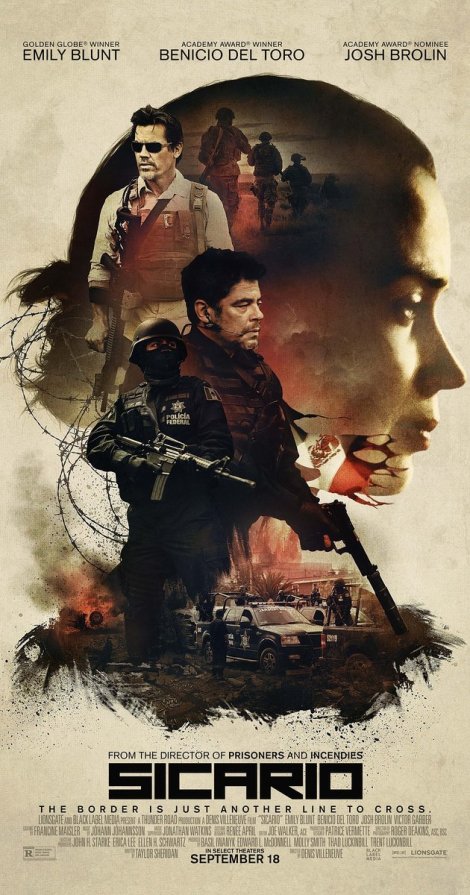
I had intended to see Sicario (2015) when it arrived in theaters. Classes, grading, paper revisions, and committee meetings got in the way, and by the time the semester had ended it was gone from cinemas. Recently, the film appeared on Netflix in Mexico, where I live. Sicario is visually striking. The camera pans across mountains that shape the landscape around El Paso and Juárez as a brooding score adds a sense of dread. Viewers familiar with the areas depicted in the film will notice many landmarks; UTEP along I-10 peeks out in the distance; there’s a beautiful view of the Parque Público Federal El Chamizal; the Santa Fe and Córdoba bridges feature prominently as set pieces, early on in the narrative.

Some have likened Sicario to an earlier drug war movie, Traffic (2000). The parallel is not entirely correct. Although this film sees Benicio del Toro reprise the role of a disillusioned Mexican law enforcement officer willing to blur the lines of what is right and wrong, the similarities end there. At other times, Sicario felt like a spiritual sequel to Zero Dark Thirty (2012). The cinematography is stylistic, plodding, and punctuated by bursts of intense violence. Actors depicting members of Delta Force figure prominently as they join a nihilistic and shadowy operator played by Josh Brolin, who carries out a mission in Juárez escorted by Mexican Federal Police. Like Zero Dark Thirty, it also justifies torturing informants. The narrative vehicle for the audience is embodied by Emily Blunt who plays a FBI hostage rescue specialist, channelling a sense of confusion and frustration at the events she sees once she agrees to join Brolin’s team in the aftermath of a difficult police raid in Arizona.

Once Sicario is in the thick of its narrative, it transforms into a kind of macabre Alice in Wonderland. The audience is brought down into the tunnels that cross beneath the U.S.-Mexican border. The camera switches to disorienting night-vision and thermal-vision tones of green, grey, black, and white. It is a looking glass onto a violent, otherworldly landscape. And there’s this growing sense of realization that, perhaps, Blunt’s character isn’t the focus of the film after all, and it has another story to tell us.

From an historical perspective, there is a deeper problem with this film. It is an ahistorical mash. A comic book story about cartels and killers that mixes time periods and provides little context to the viewer of the origins and reasons for the drug war. Soon after the film’s start, U.S. agencies, perhaps channeling General John J. Pershing, launch a coordinated punitive raid with Mexican federal counterparts against the Sonora cartel in response to an IED-style attack near Phoenix. Where did these guerrilla tactics come from? Where, and how, did the cartels accrue such power? Sicario is deafeningly silent about the American role in the drug war. Brolin’s character longs for the status quo ante of the 1980s, but this nightmare-cum-dream, too, is a red herring meant to confuse audiences. The film’s narrative is an ouroboros of violence and revenge.

Ultimately, the feeling coming out of Sicario is empty. Yes, it is expertly filmed and acted. Along the way, audiences are treated to solid performances, including by supporting actors, Daniel Kaluuya, Maximiliano Hernández, Jeffrey Donovan, and Jon Bernthal. Director Denis Villeneuve and cinematographer Roger Deakins capture the beauty and desolation of the natural landscape that stands in sharp contrast to the bustling cities and towns along the border.

The craftsmanship, however, does not negate the sense that the journey audiences follow through these arid scenes may simply lead to a dead end. The film does little to challenge stereotypes about this region; in fact, it steeps itself in violence, not as means to educate viewers, but rather to set the scene for the next bloody action sequence. Given the politics of perception around the U.S.-Mexico border, Sicario is counterproductive. The film does not adequately address the question it implicitly poses to the audience: how, if ever, can a resolution be reached to the social problems that affect the border when only violence begets violence?

MV5BMjA5NjM3NTk1M15BMl5BanBnXkFtZTgwMzg1MzU2NjE@._V1_UY1200_CR85,0,630,1200_AL_

Sicario (2015) is distributed by Lionsgate and Black Label Media. Rated R.            Available on Blu-Ray and as a digital download.

Categories: Essay Series | 4 Comments

CFP: Indigenous Writing and Culture in the United States and Canada

Happy May, dear readers, we wanted to let you know about a great opportunity. Scholars who work with Indigenous writing and culture of the United States and Canada are encouraged to apply. The Literary Encyclopedia wants qualified candidates for writing projects that will expand the program’s coverage of Indigenous people. From the announcement:

All offers of contribution should come accompanied by an up-to-date CV and, in the case of doctoral students who wish to offer a contribution, also a short writing sample. The overwhelming majority (about 90%) of our contributors are academic scholars, while the remaining percentage is made up of highly endorsed doctoral students and independent researchers.

If you want to contribute, contact the volume editor, Dr. Padraig Kirwan (p.kirwan@gold.ac.uk), or the managing editor, Dr. Cristina Sandru (cristinasandru@litencyc.com). For more information, follow the link.

Categories: News and Announcements | 3 Comments

Rethinking Interconnectivity along the U.S.-Mexico Border

The U.S.-Mexico border is the most frequently traversed political boundary in the world. In his new book, Connectography: Mapping the Future of Global Civilization, Parag Khanna, a research fellow at the Lee Kuan Yew School of Public Policy at the National University of Singapore, sees cities, communication networks, and transportation infrastructure as the key points of reference to understand how global society organizes itself, today. Although his argument diminishing the importance of national boundaries is less convincing (given the legal and policing issues millions of people face), the visual (re)presentation of global population centers, and of how goods and people move across geographic space, is compelling. Recently, the Washington Post interviewed Khanna about his work. Here’s what he had to say about his map depicting the U.S.-Mexico border and the North American economy:

One of the titles I’ve given the map is ‘Think geology, not nationality.’ America is now suddenly the largest oil producer in the world. The American energy revolution is the most significant geopolitical event since the end of the Cold War, and it’s a major shift in the world’s tug of war. Ten years ago, we were all talking about how the United States and China were going to fight resource wars for Middle Eastern oil and minerals in Africa. Now, thanks to this incredible seismic revolution, we’re selling oil to China instead.

The reason this relates to North America is because, if you think about strategy in the geological terms, you realize that if the U.S., Canada and Mexico unite their energy, water, agriculture and labor resources, you create a continental empire that is more powerful than America is. I’ve not even mentioned the Arctic, which of course Canada controls half of, which is becoming a very strategic geography as the Arctic ice melts. Canada is going to potentially be the world’s largest food producer in 20-25 years as a result of climate change. And then there’s water. The southwestern United States is now in a perennial drought, and yet at the same time, perversely, is the site of the fastest growing population in the United States. So hydrological engineering may need to take place between Canada and the United States.

For more of the interview, as well as his map depicting the infrastructural linkages across the U.S.-Mexico border, follow the link.

Categories: Interviews, News and Announcements, Teaching/Professional Development | Leave a comment

Mapping Texas: From Frontier to the Lone Star State

Dear readers, for those of you who will be in the area, we wanted to let you know about a major new exhibit opening. Starting on April 29, and running until September 4, 2016, the Witte Museum in San Antonio, Texas, will be displaying forty rare maps. These documents cover 300 years of Texas history, which are made available for public viewing by the collections of the Texas General Land Office, the Witte Museum, and the private collection of Frank and Carol Holcomb of Houston. From the exhibit announcement:

Many of these maps will be on display for the first time. The fragile nature of several of the items make this a once-in-a-generation exhibit for visitors. This curated collection, dating from the sixteenth through the nineteenth century, traces the changing physical and political boundaries of Texas. It also includes artifacts and original documents relating to the creation of the selected maps…

Also put on display for the first time ever, the exhibition features the manuscript drafts of the surveys of the Texas-U.S. Joint Boundary Commission. Three different sheets, more than 14-feet wide, trace the Sabine River from its mouth in the Gulf of Mexico to Logan’s Ferry in the north, near present-day Logansport, Louisiana. A second set of maps follows the Boundary Commission survey in a straight line due north from west of Logan’s Ferry on the Sabine to the Red River. The boundaries established by these surveys were recognized when Texas entered the Union in 1845.

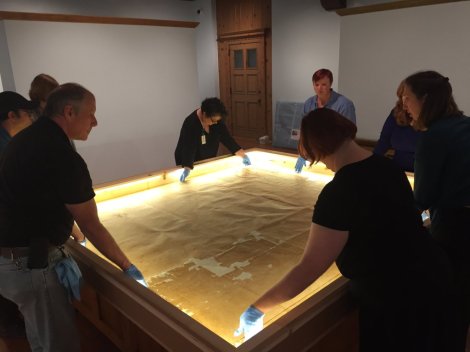
Austininstallation

Installation work, from the Witte Museum website.

It is an impressive undertaking by the exhibit organizers, and a great collaborative work drawing on multiple, important historical collections. For more information, visit the Witte Museum, online.

Categories: Exhibits, News and Announcements | Leave a comment

Q&A with James F. Brooks about “Mesa of Sorrows: A History of the Awat’ovi Massacre”

On February 25, 2016, The Charles Redd Center for Western Studies annual Annaley Naegle Redd Lecture was given by James F. Brooks, a Professor of History & Anthropology at the University of California – Santa Barbara. He spoke on his recently published Mesa of Sorrows: A History of the Awat’ovi Massacre. Students and scholars of borderlands, indigenous, and southwest histories will be familiar with Brooks from his award-winning Captives and Cousins: Slavery, Kinship and Community in the Southwest Borderlands andother important works. To accompany the video of the lecture, Professor Brooks was kind enough to also participate in a short Q&A below. Questions by Brenden W. Rensink, responses by James F. Brooks.

Read some of my own thoughts on the book at my “From the Bookshelf” series.


Continue reading

Categories: Interviews | Tags: , , , | 1 Comment

From the New York Times: “The Dark Side of Immigration Discretion”

Yesterday, the editorial board at the New York Times published a strong rebuke of the government’s deportation policies against Central American immigrants who have arrived to escape violence back home. As legal arguments and appeals work their way through the federal courts, Immigration and Customs Enforcement has aggressively detained and deported non-violent immigrants, including many students. The paper notes that this problem is particularly harsh in states like Georgia and North Carolina, where local organizational support in response to raids remains thin.

These activities are a reminder of the impact that border control policies have in regulating and enforcing federal statutes on the bodies that pass through ports of entry or cross without documentation. They also have a long reach, extending a hand thousands of miles from the border into local communities and disrupting everyday life in myriad ways. As many of us know, it is a process that has been well-documented by historians and scholars of the border and U.S. immigration. From the editorial:

While legal advocates have been scrambling, ICE has been running amok, raiding homes and public spaces in search of deportable youths. In North Carolina and Georgia, where organized advocacy is sparse, the dragnet has been unusually aggressive. Agents seized students at home and on their way to school. Appalled teachers, students and community leaders have been signing petitions and marching, pleading for justice and putting a human face on the victims of coldblooded policies: Wildin Acosta, still in detention, as his appeal proceeds. Kimberly Pineda-Chavez, arrested on her way to school. Yefri Sorto-Hernandez, arrested at his school bus stop. Jose Alfaro-Lainez, deported to El Salvador on April 13. Jaime Arceno-Hernandez, scheduled to be deported on April 27.

Students are being locked up while they appeal deportation orders, though they pose no threat of violence or flight. Ms. Saldaña has rebuffed pleas for mercy, saying the administration — which has flown more than 28,000 people back to Central America since October — needs “to send a message” that the borders are closed to illegal immigration. But pleading for refuge is not illegal. More than 100 members of Congress have denounced the raids. Both Bernie Sanders and Hillary Clinton have pledged not to deport children if they win the presidency.

To read the full editorial, follow the link.

Categories: News and Announcements | Leave a comment

6th Annual UTEP Women’s History Month Conference

The sixth annual University of Texas at El Paso (UTEP) Women’s History Month Conference, “Intersectionality on the Border,” highlighted gender and sexuality in the U.S.-Mexico borderlands. Held on the UTEP campus Wednesday and Thursday, April 6-7, the event included over fifty panels, roundtables, and presentations featuring undergraduate and graduate students, community activists, and scholars of all ranks. Among these, a panel “Gender, Sexuality, and Violence in the Borderlands,” featured borderlands historians Daniel Santana, Carolina Monsivais, and Jennifer Urban-Flores. Other panels discussed Trans issues on the border, the intersection of gender and religion in El Paso, and borderland health disparities. On Wednesday afternoon, the conference offered a ceremony recognizing renowned UTEP border studies scholar Dr. Kathleen Staudt. In her “legacy lecture” Staudt reflected on her more than three decades of scholarship and service in the frontera. On Thursday, a keynote address by University of California, Santa Cruz Latin American and Latino Studies professor Dr. Patricia Zavella described the Nuestro Texas Project, a Latina health initiative aimed at improving reproductive services in Rio Grande Valley.

The UTEP Women’s History Month conference is an annual event co-sponsored by the university’s Women’s and Gender Studies program and the Triota honor society. More information is available by calling (915) 747-6132.

Categories: conferences, Events | Leave a comment

Notes on the 2016 OAH Annual Meeting at Providence

This past week, the Organization of American Historians (OAH) held its annual conference at the Rhode Island Convention Center in Providence, Rhode Island from April 7-10, 2016. Its theme, “On Leadership,” was seen throughout the conference’s sessions – which ranged from panels on “Worst. President. Ever.,” to “Black Religious Leadership and Mass Media in the 20th Century,” and “Remembering Julian Bond.” Without a doubt, leadership in its many forms was present and embedded within the majority of the sessions over the four days of the conference.

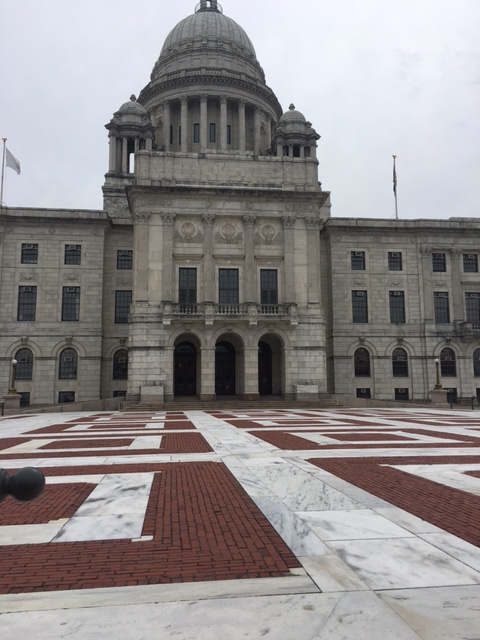
Providence

City Center, Providence

Continue reading

Categories: conferences, Events | 3 Comments

Website Built with WordPress.com.